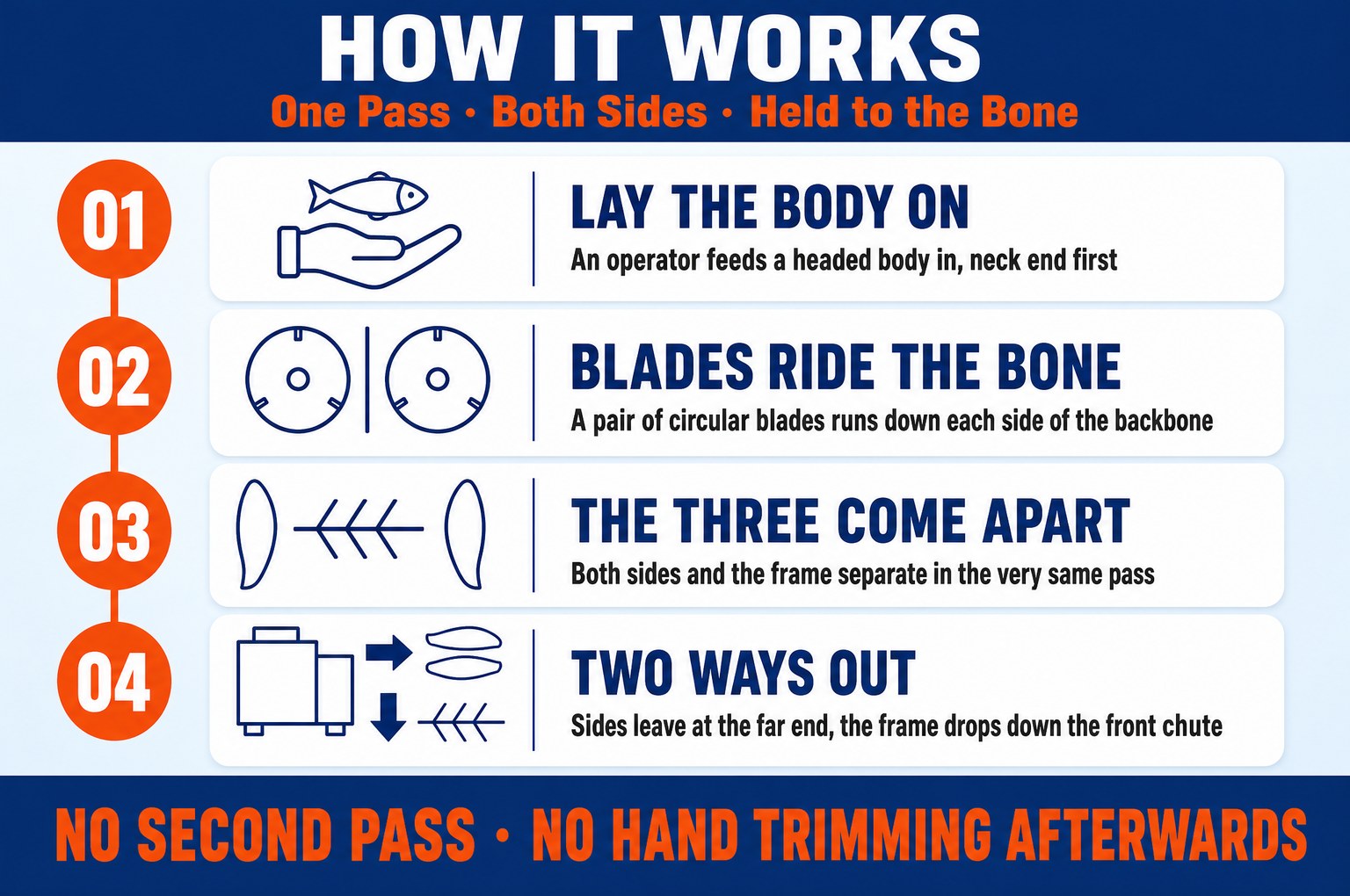
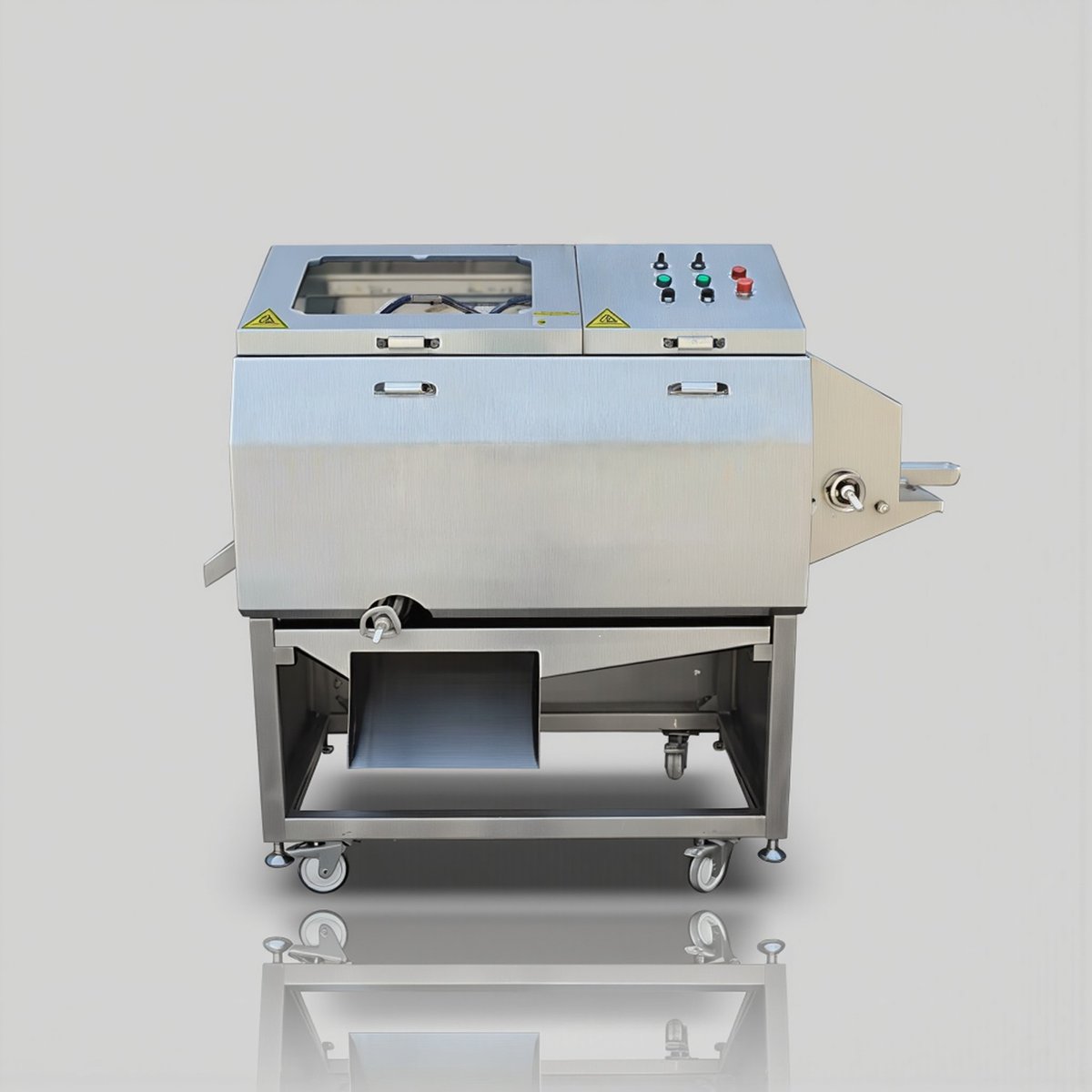
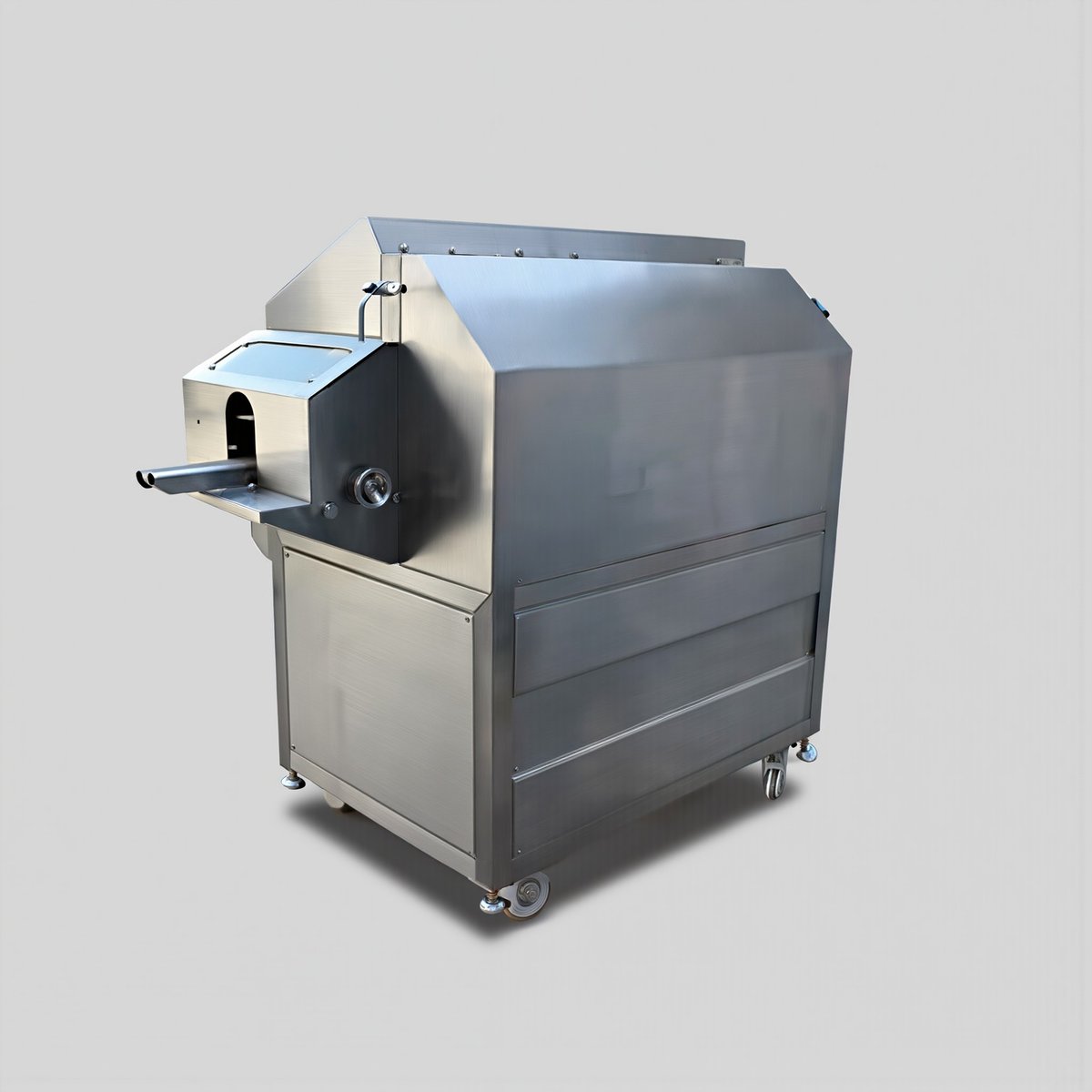
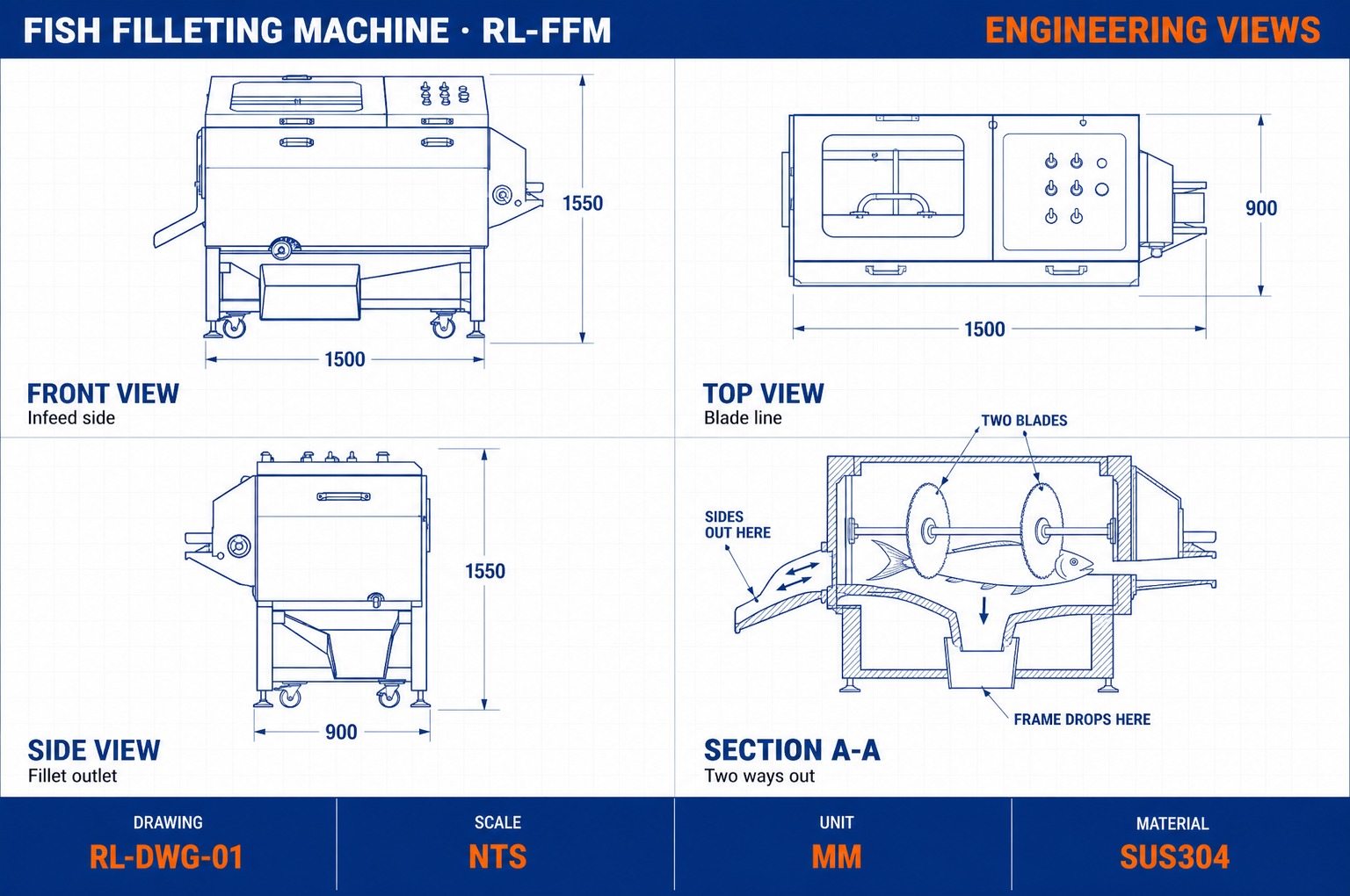
Three-piece filleting — a headed fish goes in one end, two circular blades run down either side of the backbone, and out come the left fillet, the right fillet and one clean frame. Fillets and frames leave on two separate outlets, so nobody has to sort them afterwards. 40–60 fish a minute, on the step that adds the most value to your whole line.
▶ Real test-run video below
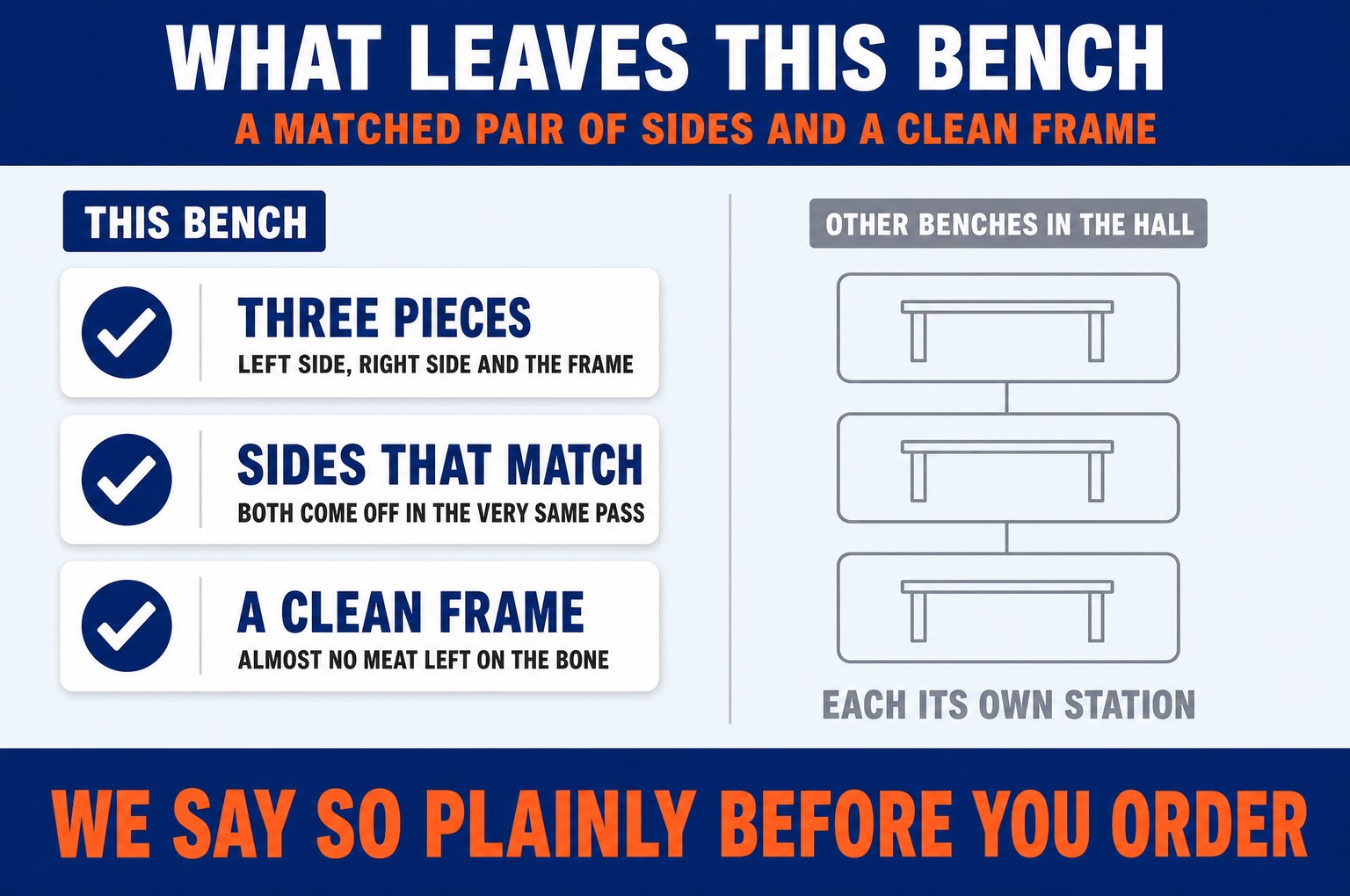
Left fillet, right fillet and the backbone, all in a single run. No splitting first and trimming after, no second pass through the machine.
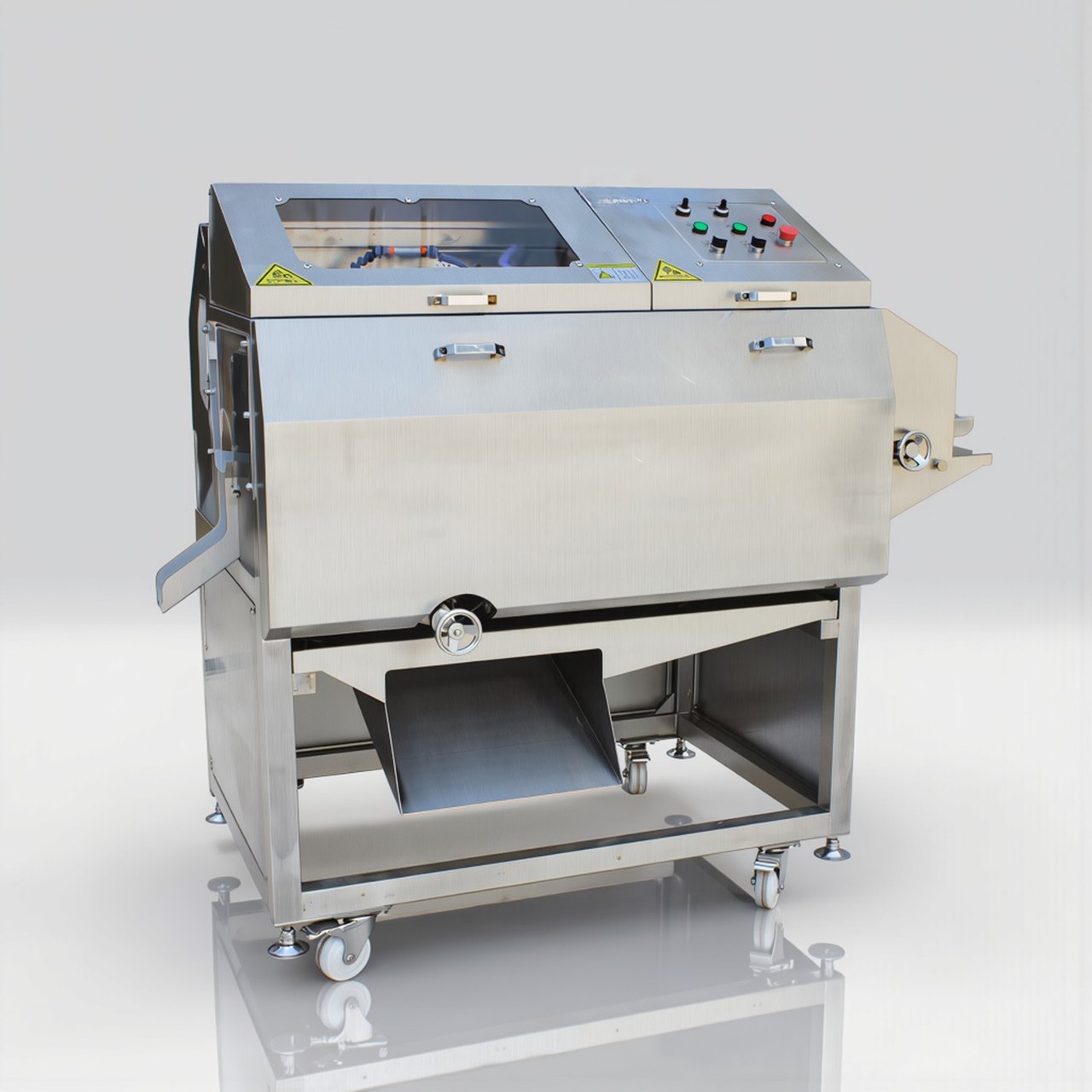
Fillets slide out on the side chute; the backbone drops down the front hopper. The two streams separate inside the machine, so your downstream station does not need a sorter.
The blades run tight against the backbone, so the meat stays on the fillet instead of on the frame. Cut position adjusts to fish size and shape — your yield stays in your hands.
One machine does the work of several skilled hand filleters, and the blade path is steadier than a hand — every fillet comes out the same thickness.
No menus to learn and nothing to go wrong in a wet room. An operator works it unsupervised after ten minutes.
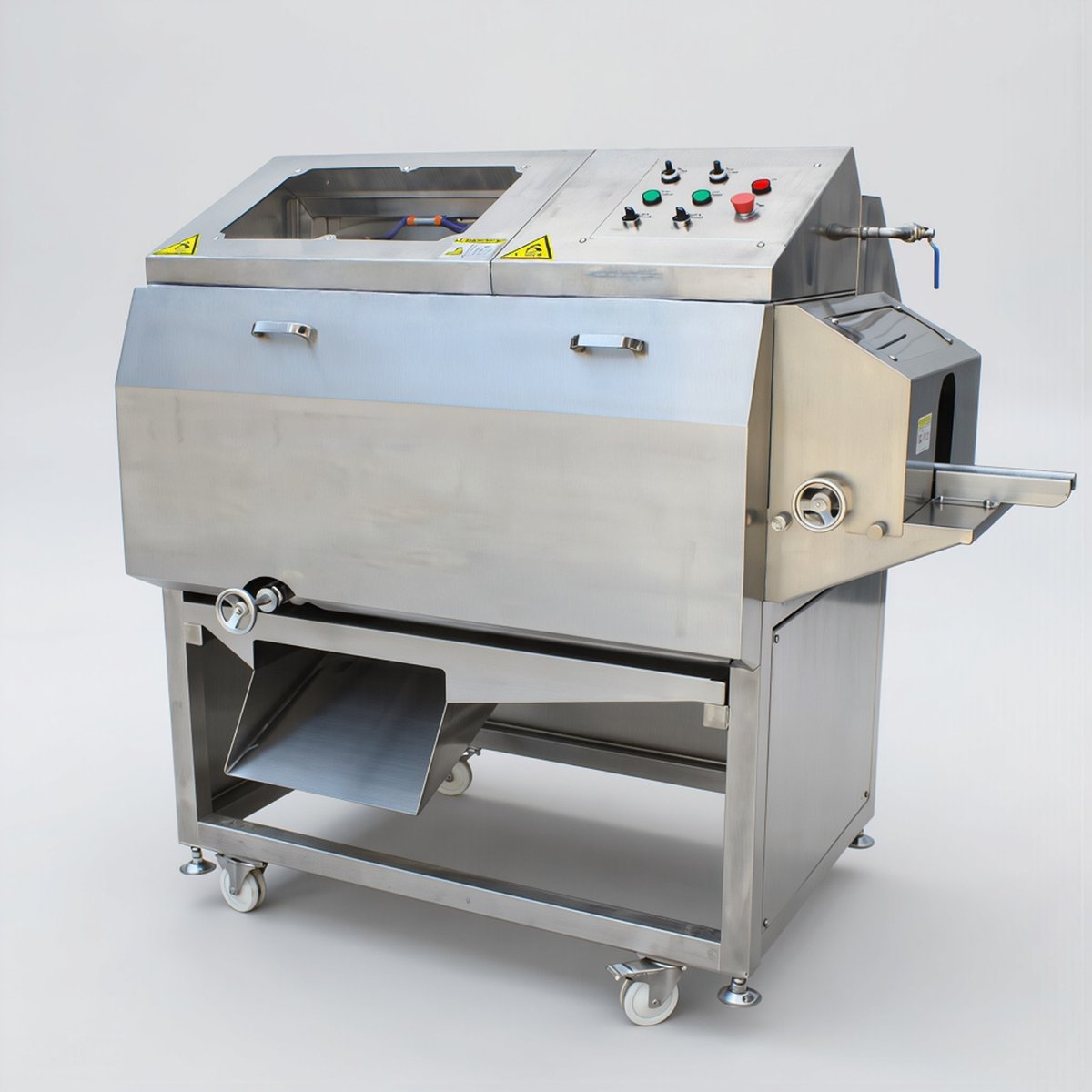
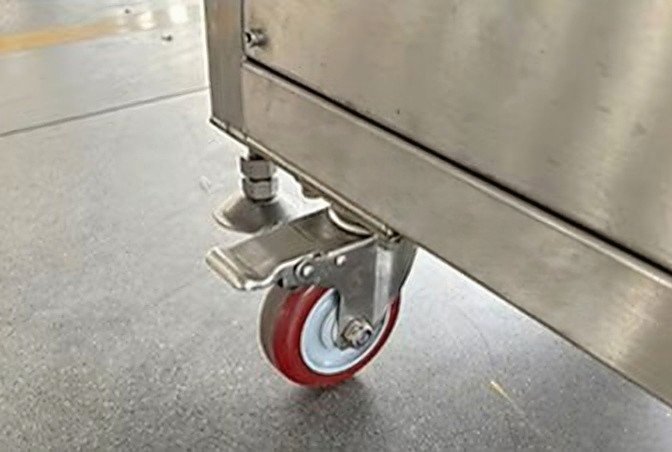
Every contact surface is food-grade 304 stainless and easy to hose down; castors let you move the machine when the line layout changes.
left fillet · right fillet · backbone
continuous, by fish size
fillets and frames already separated
every surface that meets the fish
The hard part of filleting is where the blade runs. This machine fixes the blade path — the operator only has to present the fish squarely, and the machine does the rest.


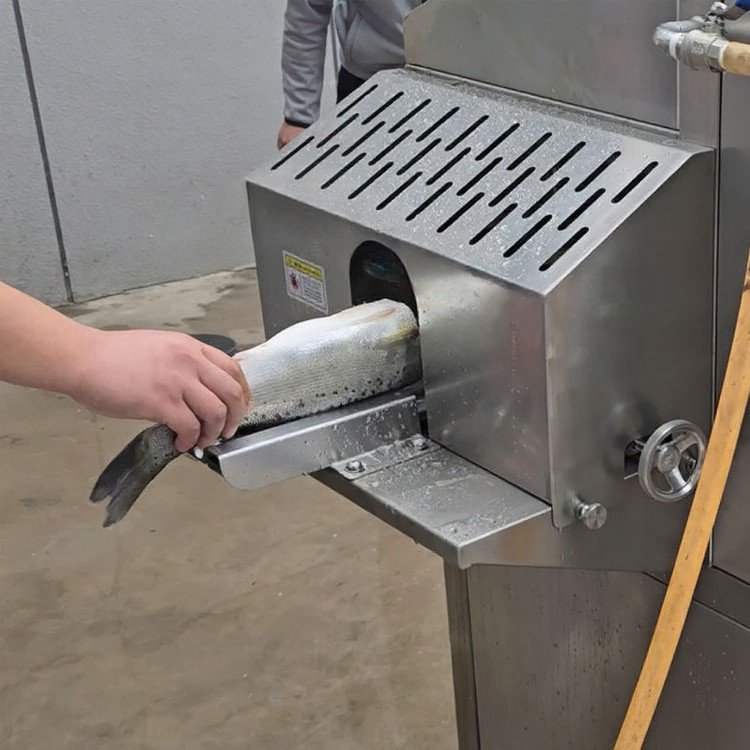
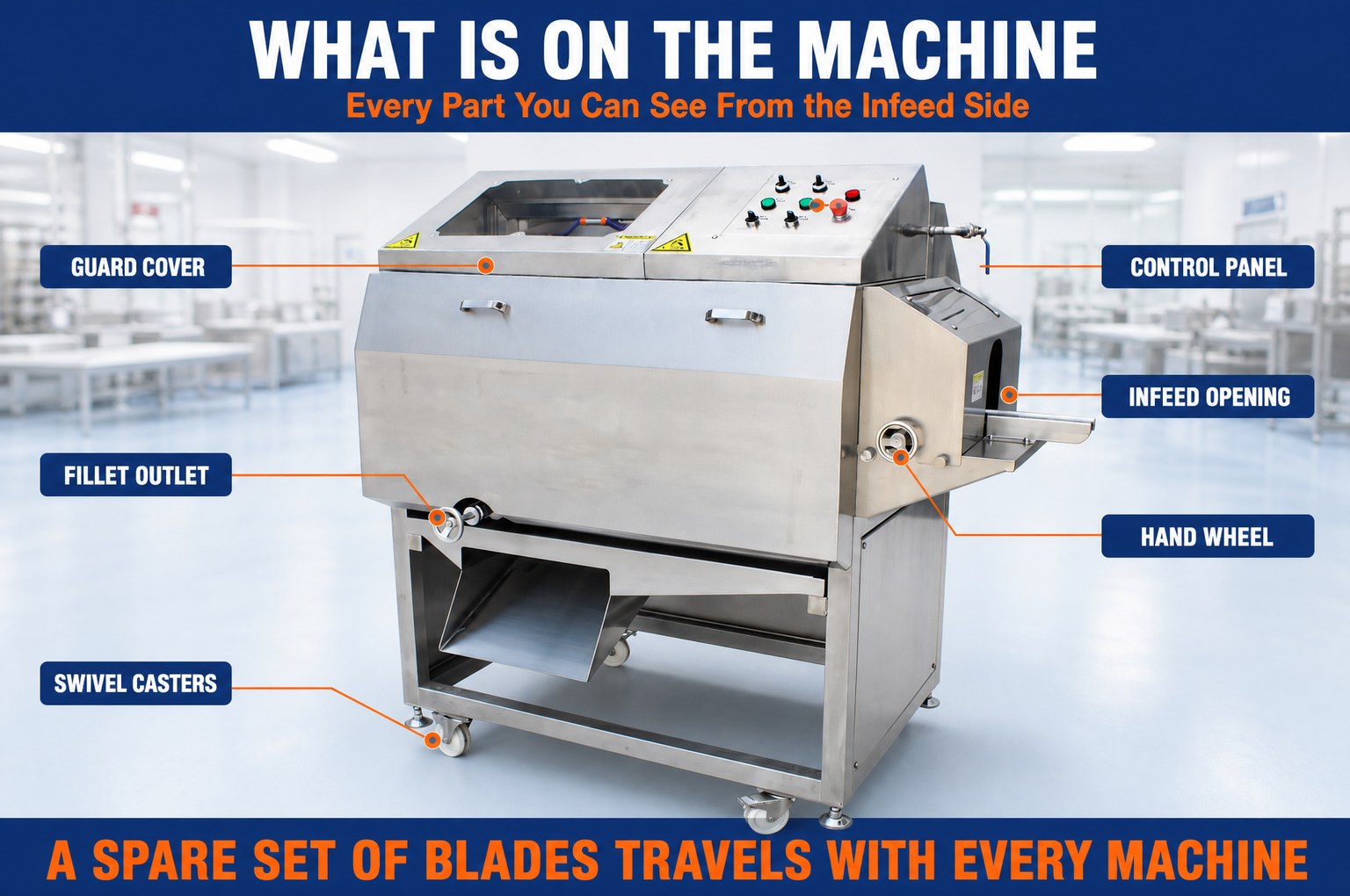
The headed fish enters here. The arch squares the fish up and guides it onto the blade line, so the operator only has to get the orientation right.

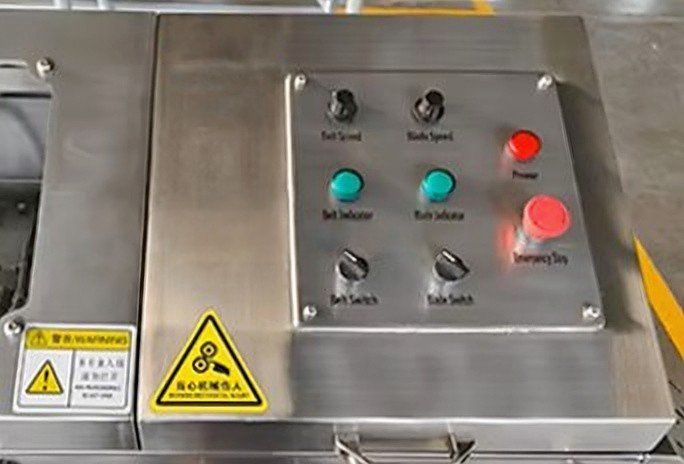
The panel carries only what it needs: start, stop, emergency stop. Sealed against washdown, reliable in a wet room.

The two finished fillets slide out on the angled chute, ready to feed straight into a skinning machine or a grading table.

The drive and guarding sit at the rear in a fully enclosed housing, keeping noise and splash inside the machine.

Push it where the line needs it; drop the levelling feet and it runs steady in place.

One operator lays the headed fish onto the infeed. Loading stays manual — but the blade runs far steadier than any hand.
| Type | Three-piece fish filleting machine |
|---|---|
| Output | Left fillet + right fillet + backbone, separated |
| Capacity | 40–60 pcs / min |
| Blades | Durable circular blades, adjustable cut position |
| Discharge | Fillets on the side chute · backbone down the front hopper |
| Material | SUS304 |
| Control | One-button start + waterproof switch |
| Voltage | 380 / 400 / 415 / 440 / 480 V 50/60 Hz or customized |
| Power | Confirmed with your order |
| Dimensions | 1500 × 900 × 1550 mm *Reference dimensions, confirmed at order. |
| Fish weight range | Confirmed with your order |
| Warranty | 12 months from date of shipment |


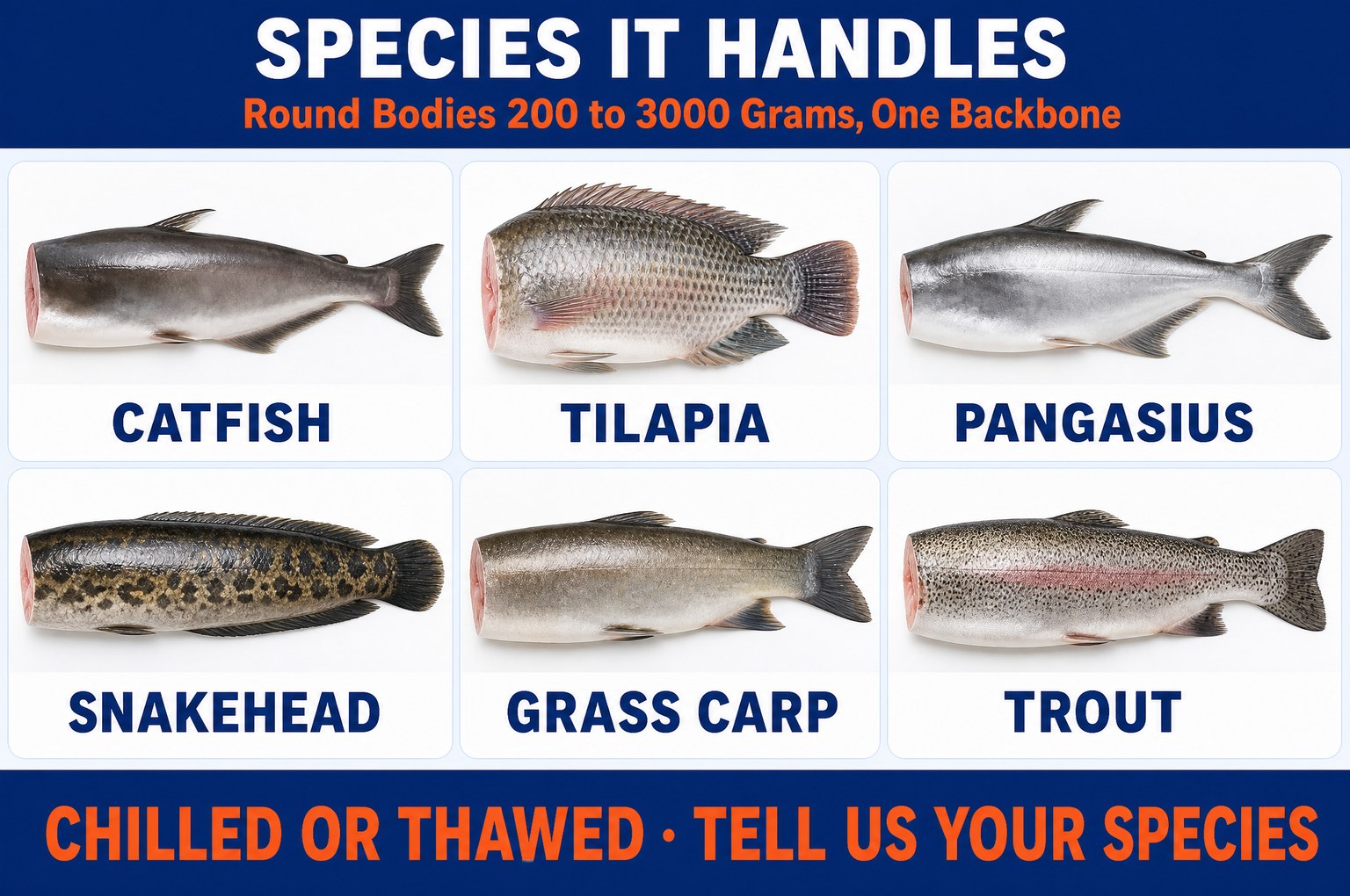
Sardines and anchovies cannot be gripped and will not yield a whole fillet. That size needs a dedicated butterfly filleting machine, not this one.
Tuna and whole 4–6 kg Atlantic salmon exceed the travel of this machine. Portion-size salmon is fine, but we will not promise you whole large salmon.
Hairtail and eel have no structure for two blades to run symmetrically along. Those need a dedicated back-splitting machine.
Filleting means running the blade against the bone, and a frozen fish can neither be gripped nor cut accurately. The fish must be fresh or fully thawed.
The biggest worry in cross-border sourcing is trust — we remove the risk with four guarantees
Before the balance, we send a live test-run video of your machine
Videos shot on the production floor in Zhucheng — real people, real machines, not studio ads
SGS / BV inspection arranged on request
Deposit to produce, balance after the test video — your funds stay safe
Tell us your species, your average fish weight and your daily output — we confirm whether the machine suits your material, how to set the blades, and send you a filmed test run. Usually a reply within hours.